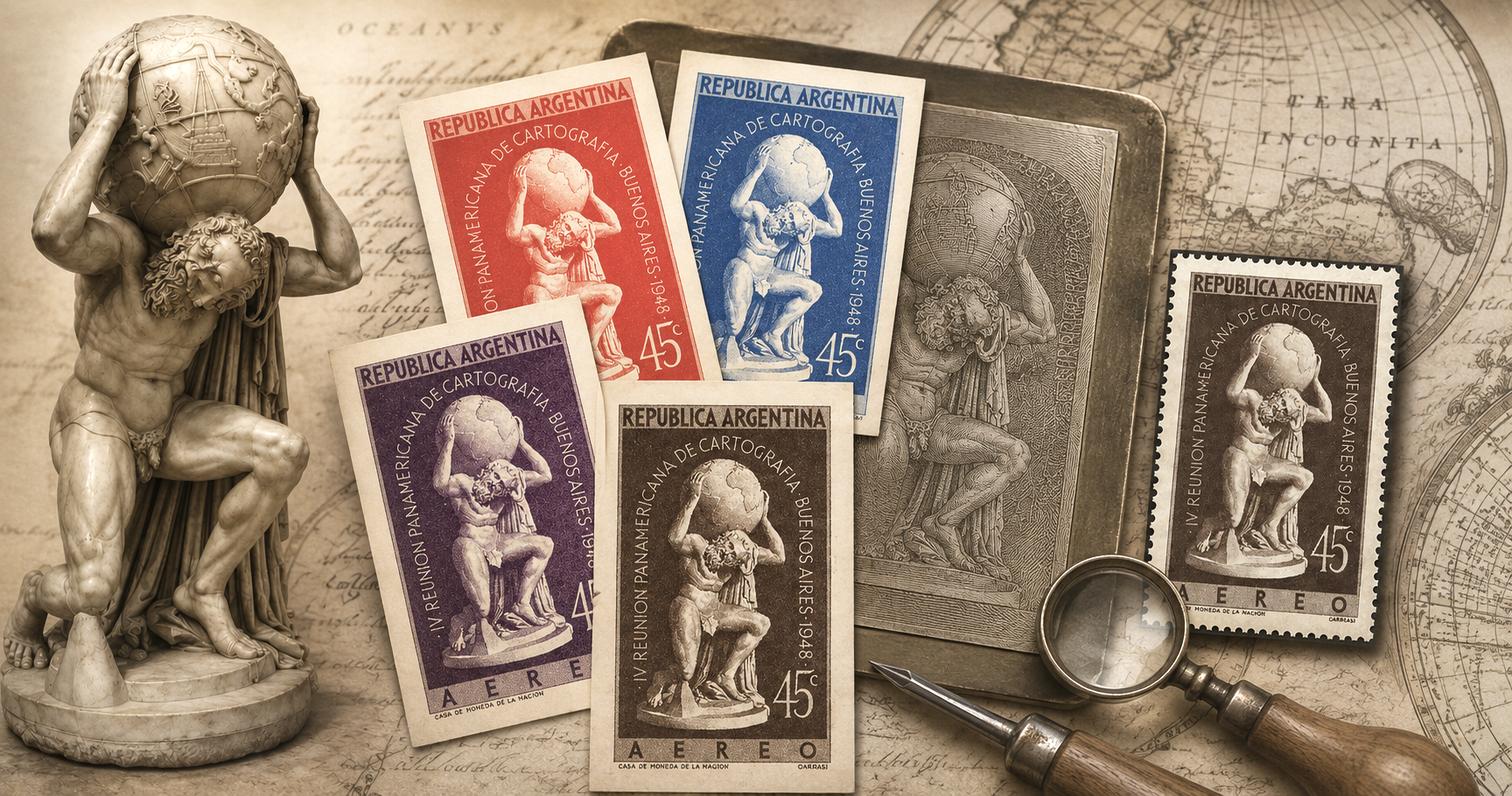
🌍巨人アトラスを切手に封じ込めるまで
ー4色のプルーフが語る制作の舞台裏ー
同じアトラスが4つの色に――完成前に残された、切手制作のもう一つの姿
 ギリシャ神話の巨人アトラス。天空をその肩に背負う巨大な存在を、わずか数センチの切手にするとしたら――
 1948年、アルゼンチンでは古代彫刻《ファルネーゼのアトラス》をもとに、一枚の切手が作られました。今回紹介するのは、その完成までの過程を伝える4色の「プルーフ(proof)」です。
 完成した切手だけでは見えてこない、アトラスが「切手になるまで」を覗いてみましょう。
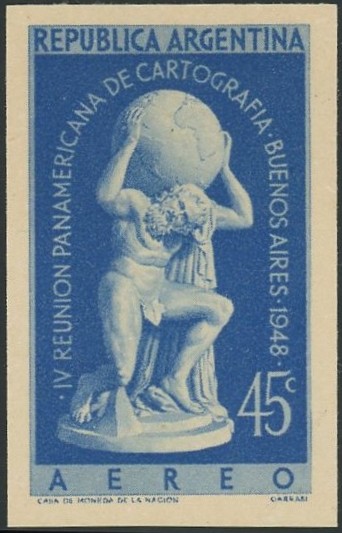
① 4色のアトラス――これは切手?
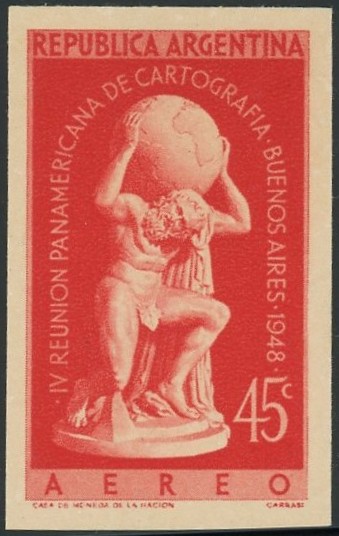
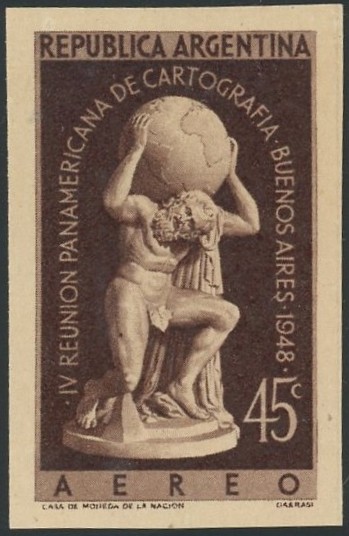
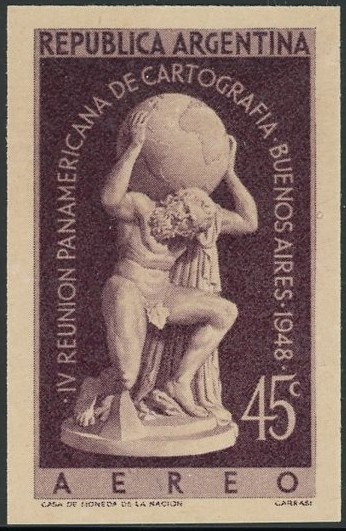
赤、茶、紫、青。同じアトラスが4つの色で並んでいます。しかし、これは4種類の色違い切手が発行されたわけではありません。
これらはプルーフ(proof)と呼ばれる、切手の制作過程で作られた試し刷りで、目打ちなどもありません。版の細かな線がきれいに出ているか、インクや色調は適切かなどを確認するために作られるもので、通常の切手のように郵便に使用することを目的としたものではありません。
完成品だけを見ていると分からない、「切手が生まれる途中の姿」が残されている――そこがプルーフの大きな魅力です。
② 巨人アトラスを、小さな切手の中へ
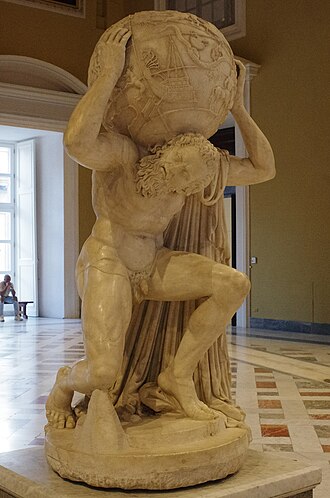
◆ファルネーゼのアトラス
天空を支える巨神アトラスを表した古代ローマ時代の大理石彫刻です。片膝をつき、星座が刻まれた巨大な天球を担ぐ姿で知られます。神話美術の傑作であるとともに、古代の星座を伝える天文学史上の貴重な資料でもあります。
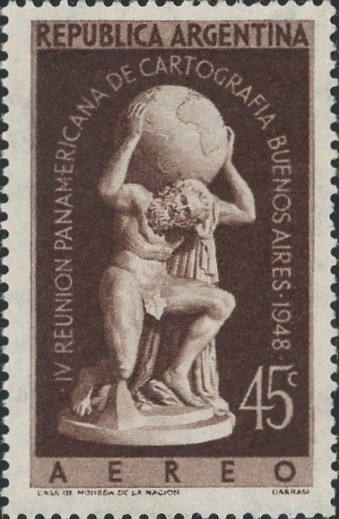
◆アルゼンチン 1948年 第4回汎米地図会議記念切手
第4回汎米地図会議の記念航空切手です。《ファルネーゼのアトラス》の星座を刻んだ天球は、大陸を描いた地球儀へ。天空を支える巨人を「世界を担うアトラス」へと変えた、地図会議にふさわしい図案です。
こうして並べてみると、古代の巨像がどのように一枚の切手へと姿を変えたのかがよく分かります。彫刻の特徴的なポーズをほぼそのまま残しながら、背景や細部を整理し、数センチの画面でも一目でアトラスと分かる図案へと再構成されています。
さらに興味深いのは、単に有名な彫刻を縮小したのではなく、「地図」という切手のテーマに合わせて図像にも手が加えられていることです。ギリシャ神話のアトラスは本来「地球を背負う巨人」ではなく、天空・天球を支える存在です。それが後世には地球を担ぐ姿でも表現され、「atlas」は地図帳そのものを意味する言葉にもなりました。
神話の巨人から古代彫刻へ、そして1948年の切手へ。時代を越えて受け継がれたアトラスは、ここで新たな役割を与えられました。
③ そして一色が選ばれた――プルーフが残す制作の痕跡
冒頭の4枚を改めて見比べると、図柄は同じでも、色によってアトラスの印象がかなり違います。赤は力強く、紫は重厚に、青では天球を担う姿がどこか静謐にも見えます。そして実際に発行された切手では、落ち着いた茶系の色が採用されました。
ただし、プルーフは単なる「色違い切手」ではありません。 切手を完成させるまでの試刷りであり、その制作過程の一部が現在まで残されたものです。だからこそ、完成切手と並べて見ることで、一枚の切手が最終形へ至るまでの舞台裏を楽しむことができます。
今回のアトラスは単色刷りなので、4色の違いがとても分かりやすい例です。多色刷りの切手になると、各色だけを刷ったものや、色を段階的に重ねて完成へ近づいていくプルーフなど、さらに複雑で面白い世界が広がります。
それはまた、別の切手のプルーフで紹介したいと思います。
④ メガテンにもアトラス――そして会社名まで?
ギリシャ神話の巨人アトラスは、『女神転生』にも悪魔として登場します。古代彫刻のように天球を担ぐ姿ではなく、黄金の鎧をまとった屈強な巨人として描かれ、ティターン神族らしい力強さが前面に出ています。
そして少々ややこしいのが、『女神転生』を制作する会社も「アトラス(ATLUS)」であること。綴りこそ Atlas → Atlus と一文字違いますが、社名も神話のアトラスに由来するとされています。
つまり、「アトラス社のゲームに、アトラスという悪魔が登場する」ということになります。天空も地球も背負っていないメガテン版アトラスですが、実は背後に“ATLUS”という巨大なものを背負っている……と考えるのは、さすがに深読みでしょうか。
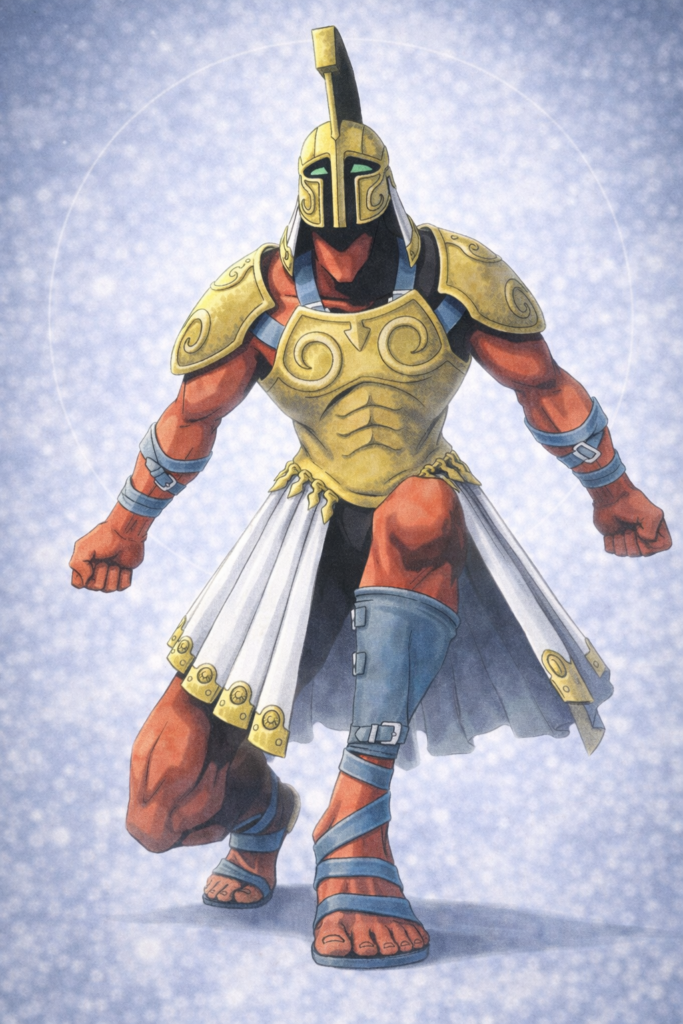
地霊アトラス
Capturing the Giant Atlas on a Stamp
Four Color Proofs from Argentina
From a giant bearing the heavens to a tiny piece of paper—the four colors reveal Atlas before the stamp reached its final form.
Atlas, the mighty Titan of Greek mythology, was condemned to bear the heavens upon his shoulders. In 1948, Argentina transformed this ancient figure into a postage stamp for the Fourth Pan-American Congress of Cartography. What makes this issue particularly fascinating are four surviving color proofs, showing us Atlas before the stamp reached its final form.
Four Colors of Atlas — But Are They Stamps?
Brown, red, purple and blue—the same Atlas appears in four different colors. These are not four varieties issued for postal use, but proofs produced during the stamp-making process.
Proofs are trial impressions used to examine details such as the engraved lines, printing quality, ink and color. They offer collectors something an ordinary issued stamp cannot: a glimpse into the process by which a stamp was created.
From an Ancient Giant to a Tiny Stamp
The design was based on the famous Farnese Atlas, an ancient Roman marble sculpture depicting Atlas kneeling beneath an enormous celestial globe. The globe is decorated with constellations, making the sculpture important not only in classical art but also in the history of astronomy.
For the Argentine stamp, however, the celestial sphere was transformed into something resembling a terrestrial globe. This was particularly appropriate for a stamp commemorating a Pan-American cartographic congress.
Atlas originally carried the heavens, not the Earth. Over time, however, his image became closely associated with geography and maps, and the word “atlas” eventually came to mean a collection of maps. The stamp cleverly brings these different traditions together.
Four Proofs — Traces of the Stamp-Making Process
Although all four proofs use the same design, color alone changes the impression considerably. Red makes Atlas appear powerful, purple gives him greater weight and dignity, while blue creates a cooler and quieter image. The issued stamp ultimately appeared in a restrained brown tone.
A proof, however, is more than simply a “different-colored stamp.” It is evidence of the production process itself. Comparing these proofs with the finished stamp allows us to see a small part of the trial and decision-making that preceded publication.
This Atlas issue is a particularly clear example because it was printed in a single color. With multicolored stamps, proofs can become much more complex, sometimes showing individual colors or successive stages as the colors are combined. I hope to introduce such examples from my collection in future articles.
Atlas in Megami Tensei — and ATLUS?
Atlas also appears as a demon in Megami Tensei. Instead of kneeling beneath a celestial globe like the ancient sculpture, the game version is presented as a powerful armored giant, emphasizing the strength of a Titan.
And there is one amusing complication: the company behind Megami Tensei is itself called ATLUS. The spelling differs by just one letter—Atlas and Atlus—while the company name is also said to have been inspired by the mythological giant.
So we have Atlas appearing in a game made by ATLUS.
The Megami Tensei Atlas may carry neither the heavens nor the Earth on his shoulders—but perhaps having “ATLUS” behind him is burden enough.
コメント