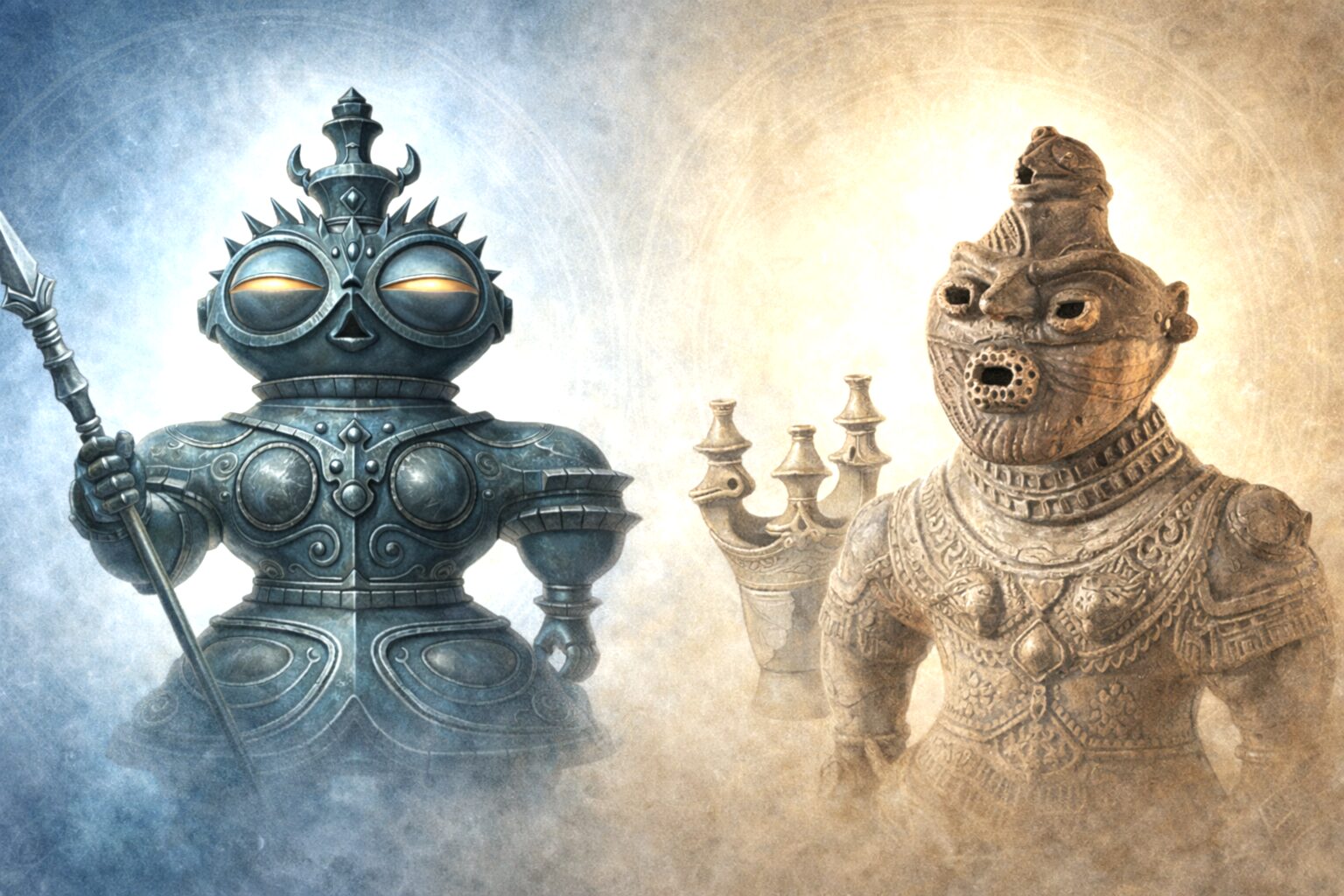
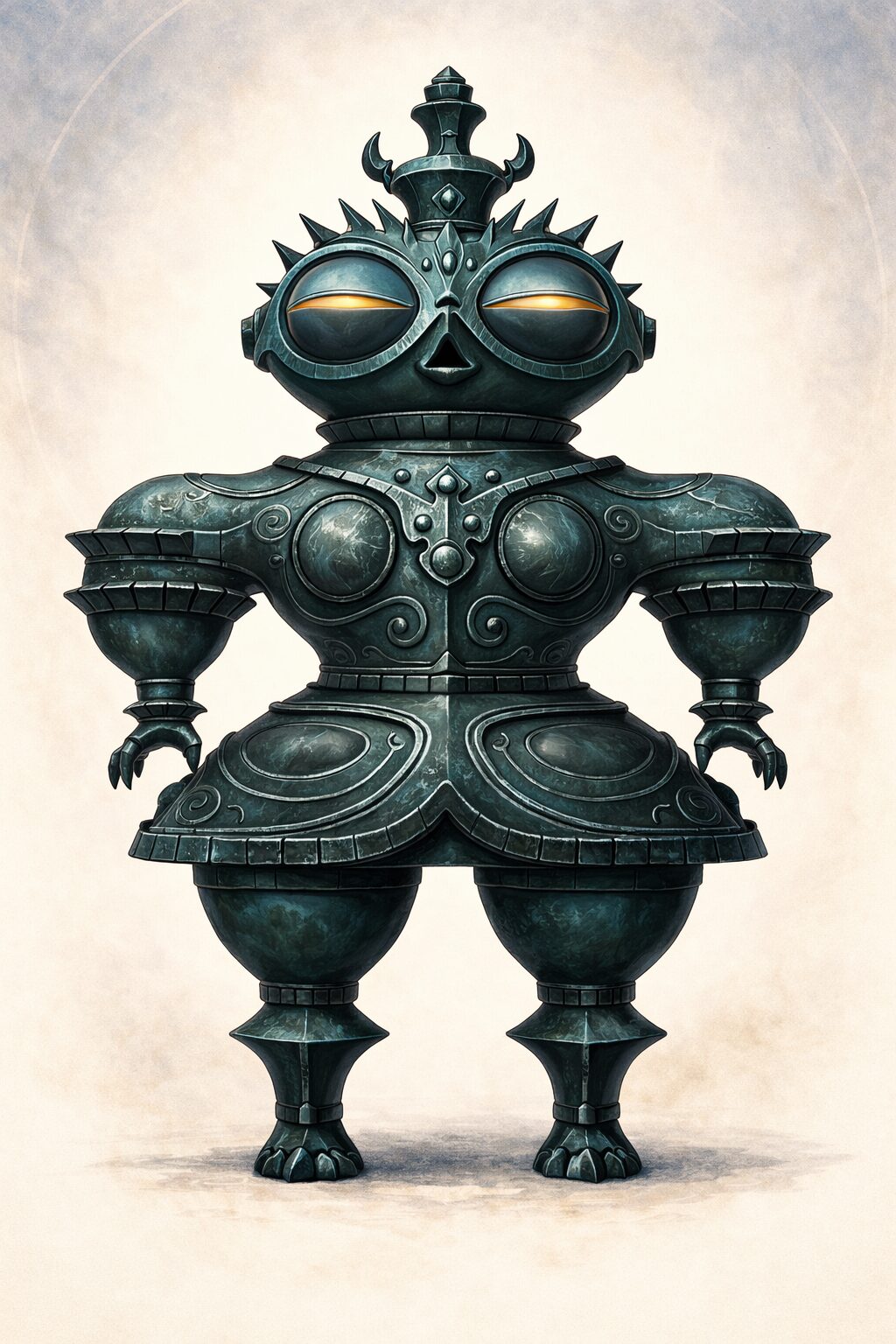
🗿アラハバキ Arahabaki
-大地の記憶を宿す異神――忘れられた古代の境界を守る守護者-
 アラハバキは、日本神話や民間伝承にその名を残す謎多き神です。東北地方を中心に信仰されたとされ、古代日本の先住民や土着信仰との関係がしばしば語られます。その正体は明確ではなく、神・精霊・守護神など様々な説が存在します。
 『女神転生』シリーズでは独特な土偶の姿で登場し、強烈な存在感を放っています。歴史と伝承の狭間に立つ、日本神話最大級のミステリーのひとつです。
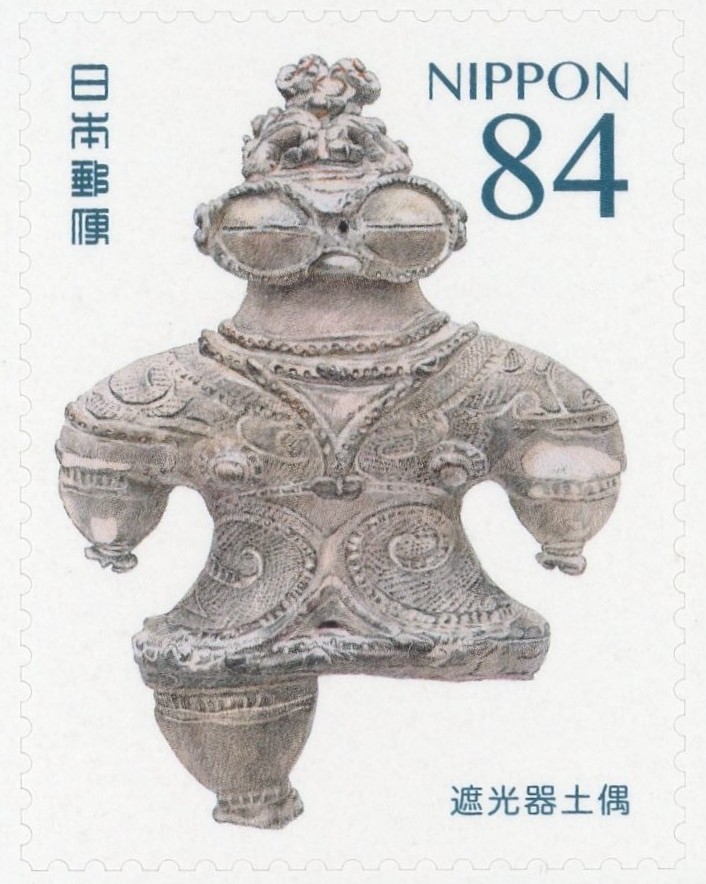
日本 2022年 世界遺産シリーズ
10種の遺跡セットシートより
遮光器土偶切手(左)と初日印(右)
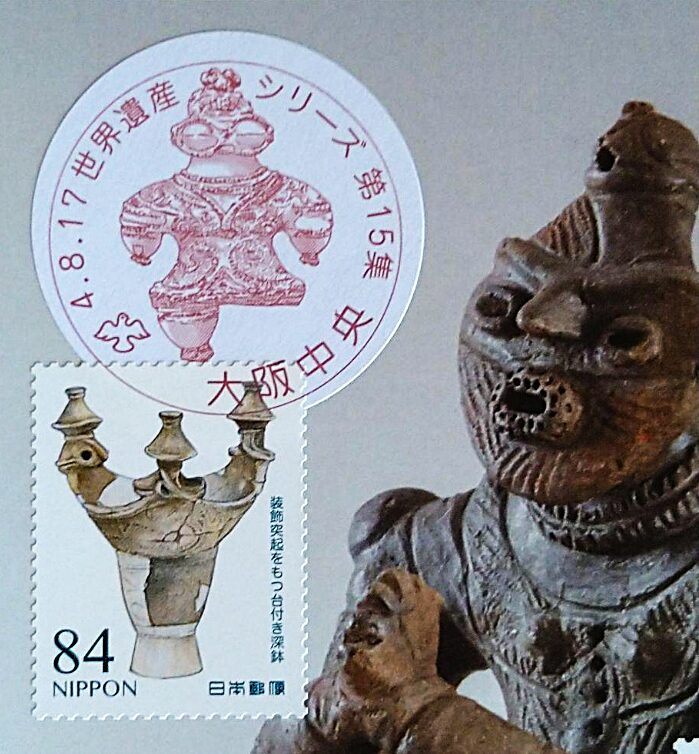
◆アラハバキを土偶と結びつける確実な史料はありません。しかし縄文文化や東北の古代信仰との関連が語られ、『女神転生』では遮光器土偶を思わせる姿で描かれました。
メガテンと神話におけるアラハバキ
アラハバキ(荒脛巾神・荒覇吐神)は、日本の古代信仰に登場する非常に謎の多い神です。記紀神話にはほとんど姿を見せませんが、東北地方を中心に各地の神社や地名に痕跡が残されています。そのため、大和朝廷による中央集権化以前から信仰されていた土着神ではないかと考えられています。名前の由来すら確定しておらず、「足を守る神」「境界を守る神」「蝦夷の神」など多様な解釈が存在しています。
アラハバキをめぐる代表的な伝承は、古代東北の人々との結びつきです。中世の『東日流外三郡誌』などでは、アラハバキは津軽地方を守護する神として語られています。また、蝦夷や縄文文化の系譜を引く神とみなされることもあり、大和朝廷に征服された人々の信仰が後世まで残ったものではないかという説もあります。ただし確実な史料は少なく、現在も研究者の間で議論が続いています。
象徴的な意味としては、「境界」と「守護」が重要です。古代の人々にとって境界とは、村と外界、生者と死者、人間と神々を分ける神聖な場所でした。アラハバキはそうした境界に立ち、共同体を災厄から守る存在だったと考えられています。また、中央の権力や秩序に組み込まれなかった「古き神々」の象徴としても語られます。そのためアラハバキは、日本神話における異端性や古層信仰を体現する存在ともいえるでしょう。
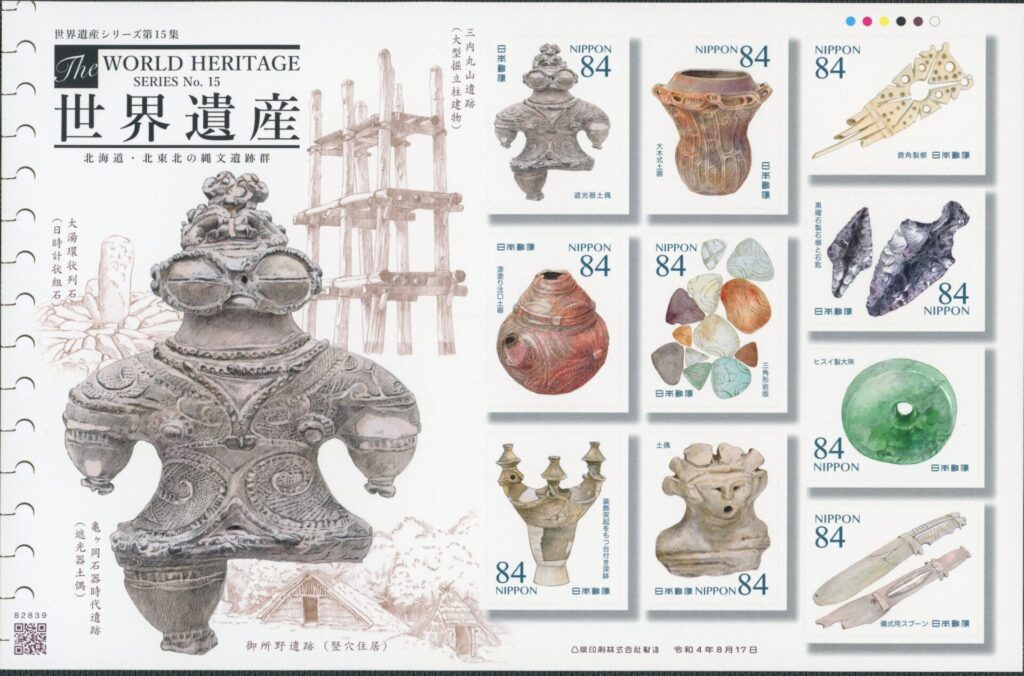
日本 2022年 世界遺産シリーズ 古代信仰の守護神 遮光器土偶と縄文遺跡切手(全体シート)
アラハバキそのものを描いた古い図像はほとんど残されていません。しかし近年では縄文文化との関連がしばしば語られることから、遮光器土偶をはじめとする土偶が象徴的なイメージとして用いられています。本ページで紹介する世界遺産シリーズ第15集「北海道・北東北の縄文遺跡群」の切手シートでは、余白部分に大きく遮光器土偶が描かれ、単片切手としても採用されています。さらに初日印にも同じ土偶が使用されており、縄文文化を象徴する存在として重要な位置を占めています。実際には土偶とアラハバキを直接結びつける証拠はありませんが、失われた古代信仰を連想させる造形は、アラハバキのイメージと驚くほどよく重なります。
『女神転生』シリーズでは、アラハバキはほぼ一貫して巨大な土偶の姿で描かれています。特に遮光器土偶を思わせる大きな目と重厚な体躯はシリーズを代表するデザインのひとつです。当初はその異端性から「邪神」として登場し、その後、土着の神々である「国津神」となり、物理攻撃を無効化する特殊な守護神として扱われます。華やかな主神や英雄神とは異なり、忘れられた古代の力を秘めた存在として描かれる点が特徴です。正体不明でありながら強烈な個性を放つアラハバキは、日本神話の深層と縄文の神秘を象徴する、『女神転生』屈指の異色の神格といえるでしょう。
“Arahabaki” in Shin Megami Tensei and Japanese Mythology
Arahabaki is one of the most enigmatic deities associated with Japanese folklore and ancient beliefs. Unlike the gods of the classical chronicles, this deity appears mainly in local traditions, especially in northeastern Japan. Because of this, many scholars believe Arahabaki may represent a pre-Yamato indigenous god whose worship survived outside the mainstream tradition.
Many legends connect Arahabaki with the ancient peoples of the Tohoku region and with the cultural heritage of the Emishi. Although historical evidence is limited, the deity is often viewed as a symbol of older beliefs that existed before the rise of centralized rule. Its origins remain uncertain, adding to its mysterious reputation.
Arahabaki is frequently interpreted as a guardian of boundaries. In ancient societies, borders between villages, worlds, and spiritual realms were considered sacred places requiring divine protection. For this reason, Arahabaki is often seen as a protector standing between order and chaos, civilization and wilderness.
No reliable ancient image of Arahabaki survives today. However, the deity is commonly associated with Jomon culture, particularly the famous Shakoki-Dogu figurines. The Japanese World Heritage stamp sheet featuring the Jomon Sites of Hokkaido and Northern Tohoku prominently depicts such a figurine in both the sheet design and commemorative cancellation. Although there is no direct evidence linking Arahabaki to these figures, they have become a powerful visual symbol of the god.
In the Shin Megami Tensei series, Arahabaki appears as a giant clay figurine inspired by Jomon dogu. Known for exceptional defensive abilities and resistance to physical attacks, it represents ancient and forgotten power rather than divine authority. This distinctive design has made Arahabaki one of the most memorable mythological figures in the series.
コメント