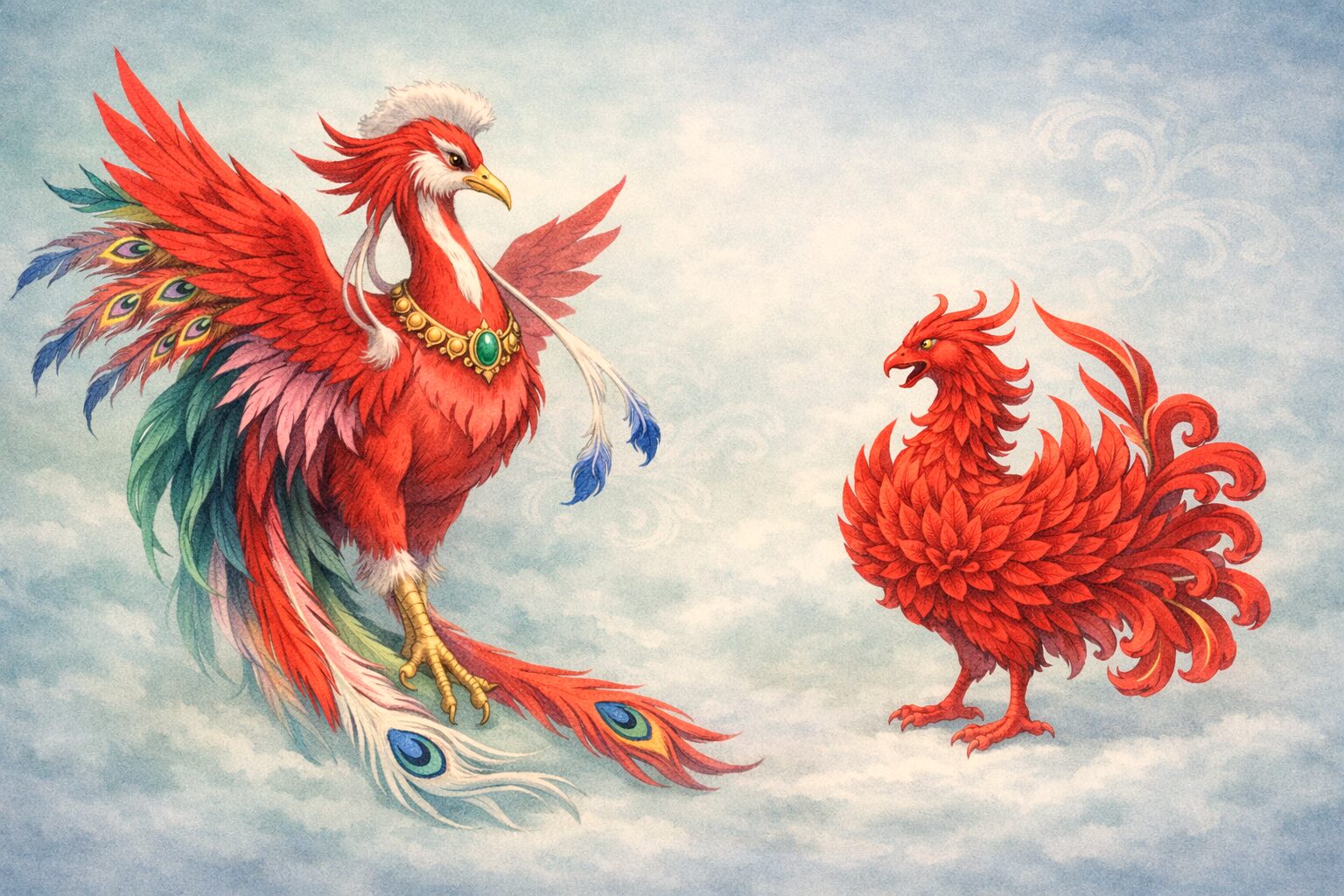
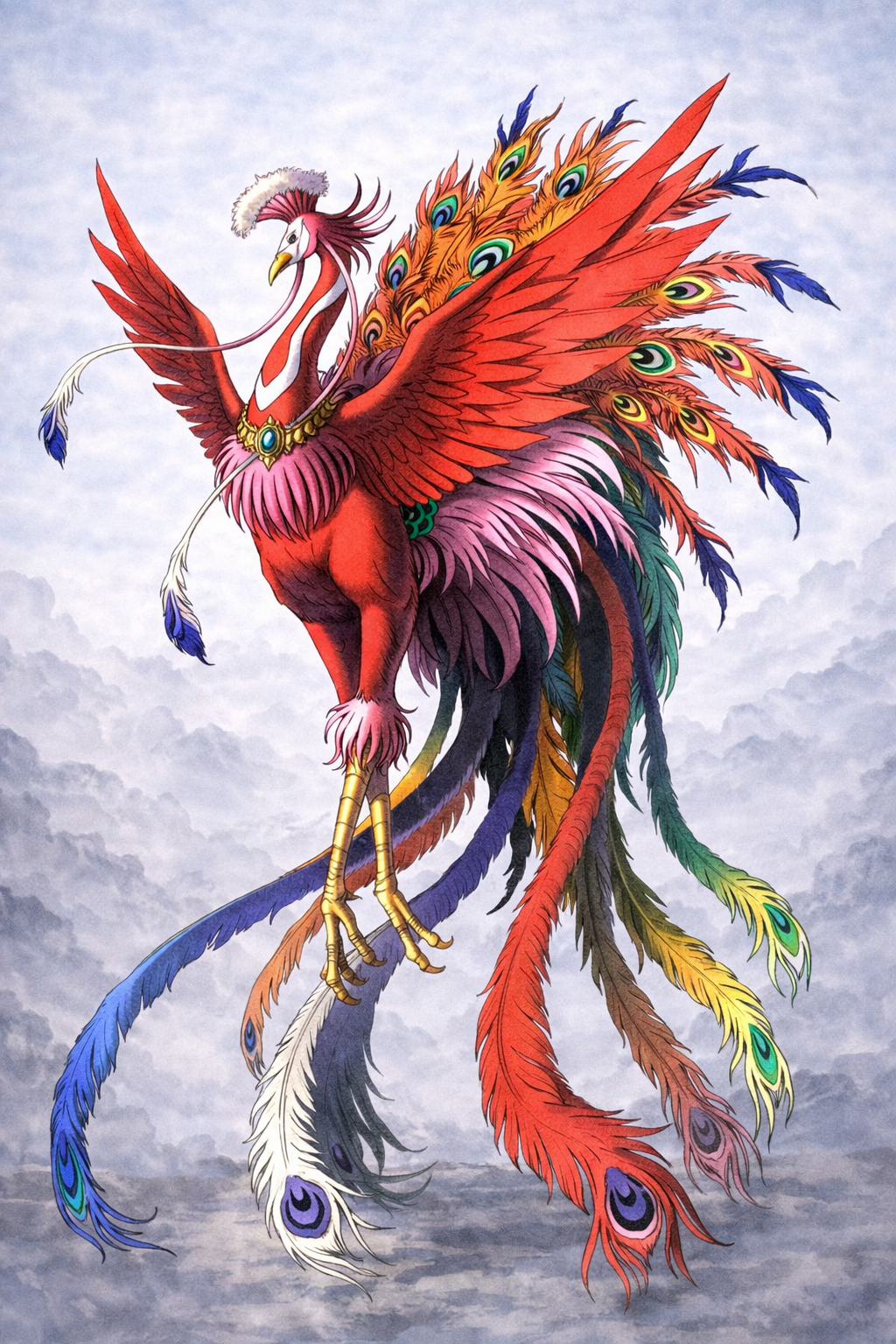
🔥スザク 朱雀 Zhuque
-南天を翔ける炎帝の霊鳥――灼熱の翼に四神の秩序を宿す朱き守護神 -
 スザク(朱雀)は、中国の四神思想において南方を守護する霊鳥です。炎や夏、太陽、生命力を象徴する存在として古くから信仰されてきました。鳳凰に似た優雅な姿で描かれることも多く、日本でも古墳壁画などにその姿を見ることができます。
 『女神転生』シリーズでは、霊鳥として登場し、火炎系スキルを操る存在として知られています。華やかで気高い姿は、東洋神話を代表する神獣の一柱といえるでしょう。
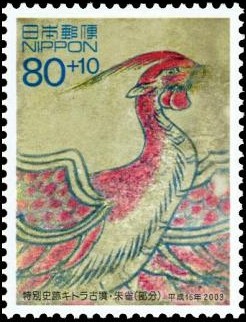
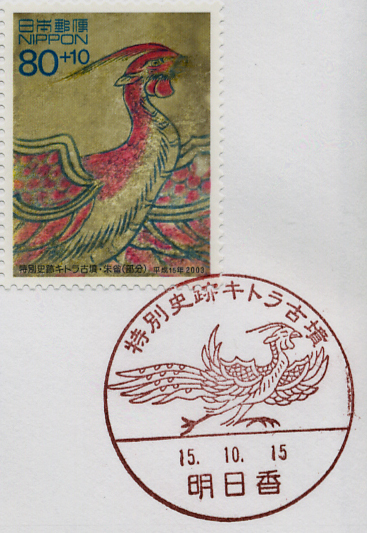
◆日本 2003年 キトラ古墳の朱雀
初日特別消印には全身が描かれる
メガテンと神話におけるスザク
スザク(朱雀)は、中国古代の天文・方位思想である「四神」の一角を担う霊鳥です。四神とは東の青龍(セイリュウ)、西の白虎(ビャッコ)、北の玄武(ゲンブ)、そして南の朱雀から構成され、それぞれが方角・季節・自然の力を司っています。朱雀は南方と夏、さらに「火」の属性を象徴する存在であり、燃え上がる炎や太陽の力と結び付けられてきました。その姿は大きな鳥として描かれ、長い尾羽と優雅な翼を持つことから、しばしば鳳凰と混同されることもあります。
中国では、朱雀は単なる空想上の鳥ではなく、宇宙の秩序を支える神聖な存在として考えられていました。陰陽五行説とも深く結び付き、南=火=赤という概念を象徴する神獣として位置づけられています。そのため宮殿や陵墓、都市設計などにも四神思想が取り入れられ、朱雀は南門や南方守護の象徴として扱われました。日本の平安京でも「朱雀大路」という名にその思想が残されており、古代東アジアにおける影響力の大きさを感じさせます。
日本において特に有名なのが、奈良県・高松塚古墳やキトラ古墳の壁画です。そこには四神が鮮やかに描かれており、朱雀は赤く大きな翼を広げた神鳥として表現されています。冒頭のキトラ古墳壁画の朱雀は、羽毛の流れや尾羽の曲線が非常に美しく、日本古代美術を代表する神獣表現のひとつともいわれます。2003年にはキトラ古墳壁画保存事業に関連して、日本で朱雀を描いた寄付金付き切手が発行されました。同時に同じ古墳の白虎の切手も発行されており、古代壁画の優美な姿が現代の郵趣資料として受け継がれています。
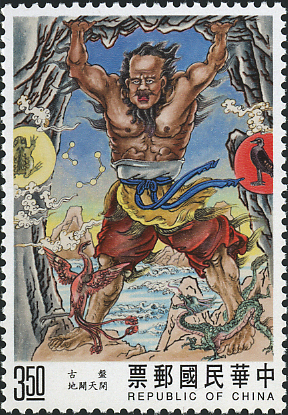
◆台湾 1995年
盤古の足元に朱雀と青龍
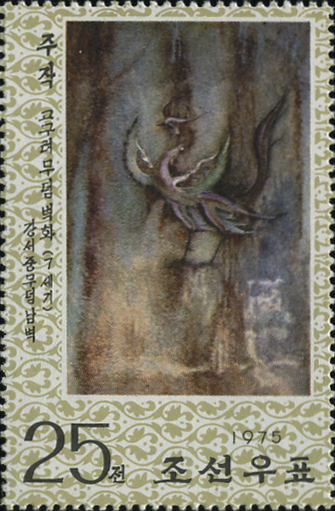
◆北朝鮮 1975年
高句麗古墳群の壁画
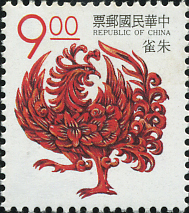
◆台湾 1993年 吉祥動物シリーズ
古代中国の装飾文様をもとにしたもので、吉祥図像の伝統を感じさせます。燃えるような赤い羽は、朱雀の性格を鮮やかに表しています。
台湾の1993年発行「四神」切手シリーズでは、朱雀は炎のような赤い羽を持つ霊鳥として力強く描かれています。一方、北朝鮮1975年の切手では、キトラ古墳とはまた違った古代壁画で、幻想的で神秘的な姿であり、同じ朱雀でも国や時代によって描写が異なる点が興味深いところです。これらの切手からは、朱雀が単なる鳥ではなく、「国家や都を守る神聖な存在」として東アジア文化圏に広く共有されてきたことが分かります。
『女神転生』シリーズでは、スザクは多くの作品に登場し、火炎属性を得意とする中~高レベルの霊鳥として、美しい翼と鋭い眼光を持つ神鳥として表現されています。中盤以降に活躍する頼れる仲魔であり、その美しさもあって人気もあります。四神の一柱としてセイリュウ・ビャッコ・ゲンブと並び立つ姿は、東洋神秘思想そのものを象徴しているといえるでしょう。
“Zhuque” in Shin Megami Tensei and Chinese Mythology
Suzaku, also known as the Vermilion Bird, is one of the Four Symbols of Chinese mythology. It governs the southern direction and represents summer, fire, and the power of the sun. Depicted as a magnificent sacred bird with elegant wings and a long tail, Suzaku is sometimes associated with the phoenix due to its graceful appearance.
In ancient China, the Four Symbols formed part of a cosmic system connected to astronomy, direction, and the balance of nature. Suzaku symbolized the element of fire and the color red within the theory of Yin-Yang and the Five Elements. Because of this, it became an important guardian spirit in palaces, tombs, and city planning. Even in Japan, traces of this belief remain in names such as “Suzaku Avenue” in the ancient capital of Heian-kyo.
Suzaku is especially famous in Japan through the wall paintings of the Takamatsuzuka and Kitora tombs in Nara. These murals portray the Vermilion Bird with beautifully curved feathers and vivid colors. In 2003, Japan issued commemorative stamps and first day covers related to the preservation of the Kitora tomb murals, featuring Suzaku alongside Seiryu, the Azure Dragon.
Different countries have portrayed Suzaku in unique ways on stamps. Taiwan’s 1993 Four Symbols stamp series shows Suzaku as a fiery red sacred bird full of energy, while North Korean stamps from 1975 depict a more mysterious and ancient-looking form inspired by mural art. These stamps reflect how widely the Vermilion Bird has been respected across East Asian cultures.
In the Shin Megami Tensei series, Suzaku appears as a powerful holy or spirit beast associated with fire magic. Its elegant design, blazing wings, and high magical abilities make it a memorable mid- to high-level demon. Together with Seiryu, Byakko, and Genbu, Suzaku represents the mystical power of the Four Symbols within the Megami Tensei universe.
コメント